

Introduction: Beyond Hardware – The Software Revolution in Aquaculture
For decades, the narrative of seafood processing focused on physical infrastructure: larger freezing tunnels, faster filleting lines, and expanded warehouse capacity. However, as the industry enters the 2026 era, the true competitive advantage has shifted to the digital realm. The Management System Tools Application Program—a comprehensive integration of software platforms designed to govern every aspect of a modern seafood factory—has become the invisible engine driving quality, profitability, and regulatory compliance.
Nowhere is this more evident than at the new Minh Dang Seafood Factory, strategically located at No. 83, Provincial Road 934, My Xuyen Ward, Can Tho City. While the groundbreaking ceremony celebrated the physical structure, the facility’s true intelligence lies in its ambitious deployment of a unified management tools ecosystem. As the Seafood Trade Fair 2026 approaches, this digital backbone will be a key differentiator, showcasing how Vietnamese processors are embracing Industry 4.0 not just on the production floor, but across the entire enterprise.
The Core Philosophy: One Platform, Total Control
The concept of a Management System Tools Application Program moves beyond using isolated software for individual tasks. It is about creating a single source of truth where data flows seamlessly between departments—from the moment raw Pangasius arrives at the receiving bay until the finished fillet is loaded into a container destined for the EU or US.
The program integrates multiple critical functions under one umbrella:
- Enterprise Resource Planning (ERP): Managing finances, procurement, inventory, and human resources.
- Manufacturing Execution System (MES): Real-time monitoring of production lines, yields, and labor productivity.
- Quality Management System (QMS): Digitalizing HACCP checkpoints, laboratory test results, and non-conformance tracking.
- Food Safety & Compliance: Automating documentation for ASC, BRC, IFS, and FDA standards.
- Supply Chain Traceability: Blockchain-enabled tracking from farm pond to finished product box.
- Environmental Health & Safety (EHS): Monitoring wastewater treatment, energy consumption, and worker safety protocols.

The Pillars of the Application Program at Minh Dang
At the Can Tho facility, the Management System Tools Application Program has been tailored to the specific demands of high-volume, export-oriented Pangasius processing.
1. ERP and Smart Inventory Control
The ERP module acts as the factory’s brain. When an order for 50 containers of frozen fillets arrives from a European client, the system instantly calculates raw material requirements against current cold storage stock, forecasts the labor shift needed, and flags any gaps in packaging materials. At Minh Dang, this means the procurement team on Provincial Road 934 can make data-driven purchasing decisions in real-time, minimizing waste and preventing costly production stoppages.
2. Digitalized QMS and HACCP
Traditional paper-based HACCP records are prone to errors, delays, and tampering. The application program at Minh Dang replaces clipboards with ruggedized tablets on the production floor. Quality inspectors record temperatures, metal detector checks, and organoleptic assessments directly into the system. If a CCP (Critical Control Point) deviation occurs—say, a freezer temperature spike—the system triggers an immediate alert to the shift supervisor and quality manager, quarantining the affected batch automatically until resolution.
This digital trail is invaluable during unannounced audits from the EU’s Directorate-General for Health and Food Safety or the US FDA. Instead of frantically searching through binders, the Minh Dang team can generate a complete batch history report within seconds.
3. Blockchain-Backed Traceability
Traceability is the cornerstone of market access. The application program assigns a unique digital identity to every batch of raw fish entering the gate at 83 Provincial Road 934. Using blockchain technology, the system records the farm of origin, feed used, veterinary treatments (if any), harvesting date, and transport conditions. This data chain is immutable and transparent.
For a consumer in Berlin scanning a QR code on a Minh Dang branded retail pack at the Seafood Trade Fair 2026 demonstration booth, this means instant access to the fish’s journey—from a specific pond in the Mekong Delta to the state-of-the-art plant in My Xuyen Ward. This level of transparency commands premium pricing and builds unshakeable brand trust.
4. Integrated EHS and Sustainability Dashboards
Sustainability is not a marketing slogan; it is a compliance requirement measured in kilowatts, cubic meters, and CO2 equivalents. The EHS module pulls live data from the rooftop solar array and the advanced wastewater treatment plant at Minh Dang. Managers view a real-time dashboard showing energy consumed per ton of finished product, water recycled, and sludge processed. This data feeds directly into corporate sustainability reports aligned with GRI (Global Reporting Initiative) standards and satisfies the environmental questionnaires increasingly required by retailers like Carrefour and Costco.
The Human Element: Change Management and Training
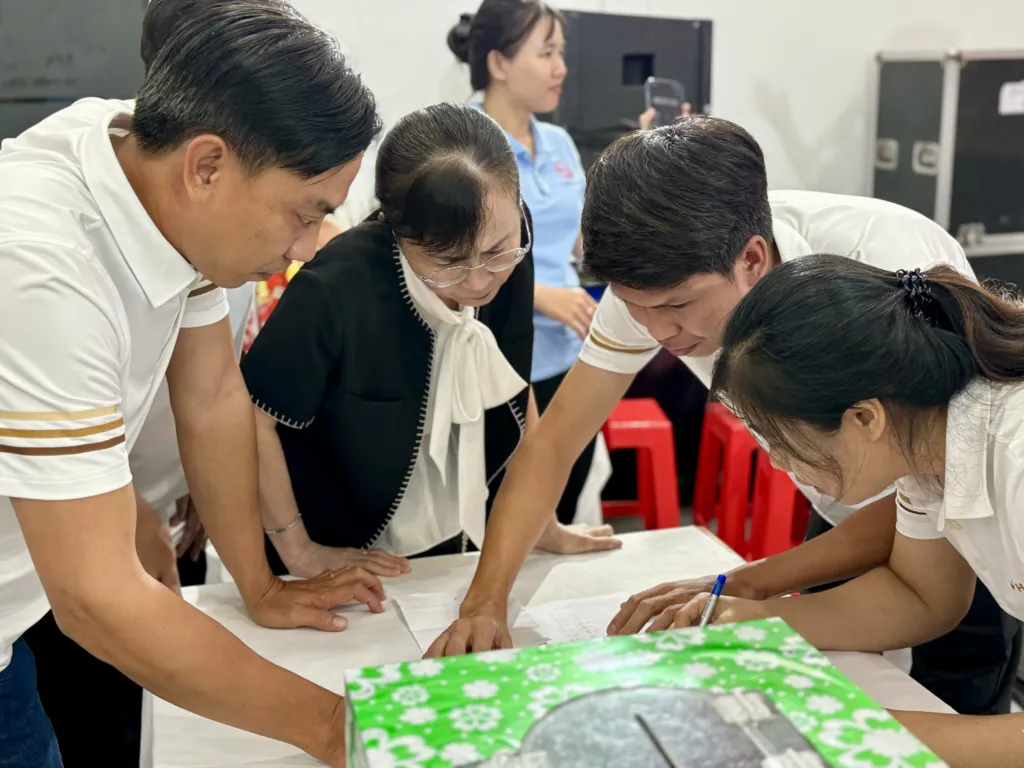
The most sophisticated tools are useless without skilled operators. The application program at Minh Dang includes a dedicated Learning Management System (LMS) module. All employees, from filleting workers to cold storage forklift drivers, undergo role-based training on the digital tools relevant to their tasks. Compliance is tracked automatically, and certifications are renewed before expiration. This investment in human capital ensures that the technology delivers its promised ROI and fosters a culture of continuous improvement on the factory floor.
Connecting to the Seafood Trade Fair 2026
At the Seafood Trade Fair 2026, the topic of management system tools will be a major discussion point. While visitors will be impressed by the physical scale of projects like Minh Dang, the more sophisticated buyers will probe deeper: “How do you guarantee consistent quality across 1,500 workers?” “How do you prove your carbon footprint?”
The answer lies in the digital architecture. The fair will feature a dedicated technology pavilion where software vendors and the Minh Dang team will demonstrate this integrated approach. Live dashboards showing simulated production data from the Can Tho plant will give importers a transparent window into the operational discipline that supports their supply chain. For buyers seeking to mitigate risk, a factory running a robust Management System Tools Application Program represents a safer, more reliable long-term partner.
The Future: AI and Predictive Analytics
Looking beyond 2026, the data captured by these management tools becomes the fuel for Artificial Intelligence. By analyzing historical data on filleting yields, seasonal pond conditions, and machine maintenance logs, the Minh Dang system will evolve from descriptive and diagnostic analytics to predictive and prescriptive capabilities. It will forecast the optimal harvest date for a specific pond to maximize fillet whiteness, predict when a compressor motor is likely to fail, and suggest the most profitable product mix for the upcoming quarter.
Conclusion: Mastering the Digital Shift
The Management System Tools Application Program is the silent hero of the modern seafood industry. It is the difference between a factory that merely survives and one that thrives in the hyper-competitive, compliance-heavy global market. At Minh Dang Seafood, 83 Provincial Road 934, My Xuyen Ward, Can Tho City, this digital ecosystem is being woven into the very fabric of the operation from day one. As the industry gathers at the Seafood Trade Fair 2026, the message will be clear: the future of seafood is not just frozen—it’s digitized.